
Magic Mushrooms


If I’d been on the ball, this would have been a great photo essay about the amazing abundance of fungi which I’ve seen in the garden, around the village and on the Links this autumn. Sadly, that shipped sailed without me getting many photos or being able to identify what I saw. I do know we have spiny puffballs, but I’ve not caught them early enough to try them (most puffballs are edible if you catch them young enough). We also have lots of fairy rings and various yellow, orange, white and even purplish fruiting bodies.
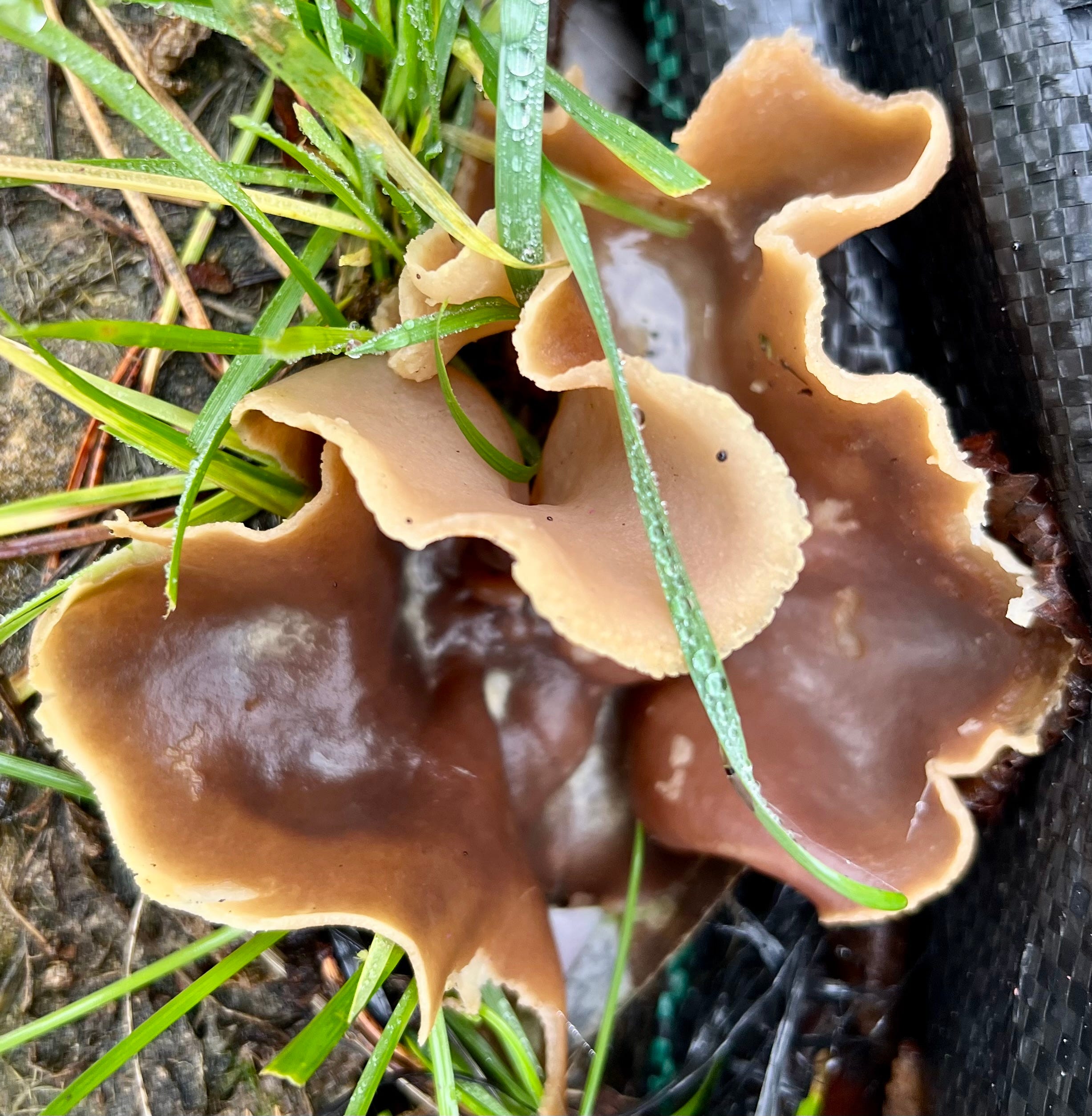
Our dog had avoided them altogether, until last week, when she decided, for no good reason, that it would be a grand idea to try one. I managed to flick most of it out of her way, but she definitely chomped down on some of it. Cue expensive trip to the vets and several doses of activated charcoal. Thankfully she suffered no ill effects, but it could have been a very different story. I was unable to identify the chosen specimen as I couldn’t find the piece I pushed away and what was left was a non-existent bit of stump. I’ve been going around the garden destroying fungi as they come up. I found some jelly ears this morning at the edge of the patio. It’s quite common to find fungi at the edge of car parks and other hard landscaping as the tendrils of mycelium can travel large distances and come up when they find earth. Always with a look at the margins when you’re on a foraging expedition.
I love mushrooms of the cultivated edible variety and have enjoyed some foraging too. I only select mushrooms I can readily identify and that don’t have any poisonous lookalikes. Chanterelles, puffballs and chicken of the woods are all fairly unique and easy to identify and don’t have anything they could be mistaken for that will make you ill or kill you, but there’s are plenty of specimens that will do both. Always make sure you are 100% certain if you’re foraging.It make sense to be able to identify toxic varieties and rule them out or at least positive ID edible varieties that can’t be confused. I’ve done both online courses and a in-person foraging course and we have some local experts who can be called upon in case of uncertainty. There have been enough cases of people being seriously harmed or killed by foraging for me not to want to take risks, but plenty of people do. After a near fatal incident in 2008 where a whole family were poisoned, Professor Watling called for more specialist in Scotland to be trained to identify poisonous mushrooms. Despite retiring from the NHS he was still regularly being contacted for identification. Get yourself trained by a specialist who knows what’s what in your area, if you’re seriously considering foraging for wild foods, fungi or otherwise. Identification mistakes cost that family their kidneys, but it could have been their lives. There are lots of organisations about the country who put on courses and foraging trips, so it’s easy to acquire the vital knowledge. A good reference book with clear photographs is also essential. Collins do a good guide and the River Cottage guides are also very useful1
If you don’t fancy extending your skill set to foraging fungi for food, there is still much pleasure to be had by discovering and identifying wild fungi (mushrooms and toadstalls), photographing them and following their cycle from primoridia to mature fruiting bodies. It’s worth tracking the progress a they look very different at early and more mature stages and identification can be difficult as a result. See what grows in your local area and get to know and understand their habits. The same fungi usually come back in the same places year after year. If you take photographs, do make sure you include the habitat, as this can be critical to a positive identification. If you are picking fungi, make sure you leave enough of the fruiting body so that it can spread its spores and continue its lifecycle.
Fungi are funny things, distinguished from all other living organisms. According to Britannica, they are not classed as plants because fungi lack chlorophyll and are characterised by unique structural and physiological features. In addition, fungi are clearly isolated from all other living organisms, including animals, by their principal modes of vegetative growth and nutrient intake. Fungi grow from the tips of filaments (hyphae) that make up the bodies of the organisms (mycelia), and they digest organic matter externally before absorbing it into their mycelia. Truly fascinating. There are over 140,000 species included within the fungi kingdom and this includes yeasts, smuts, molds, slime molds and water molds, which are fungus like organisms. Together with bacteria, they are responsible for breaking down organic matter and releasing carbon, oxygen, nitrogen and phosphorus into the soil and the air. Without them we would be overrun and lacking essential elements, so whether you’re a fan or not , it can be argued that fungi are essential to life. There have been many medical discoveries from this family of organisms so we have quite a lot to be thankful to the genus for.
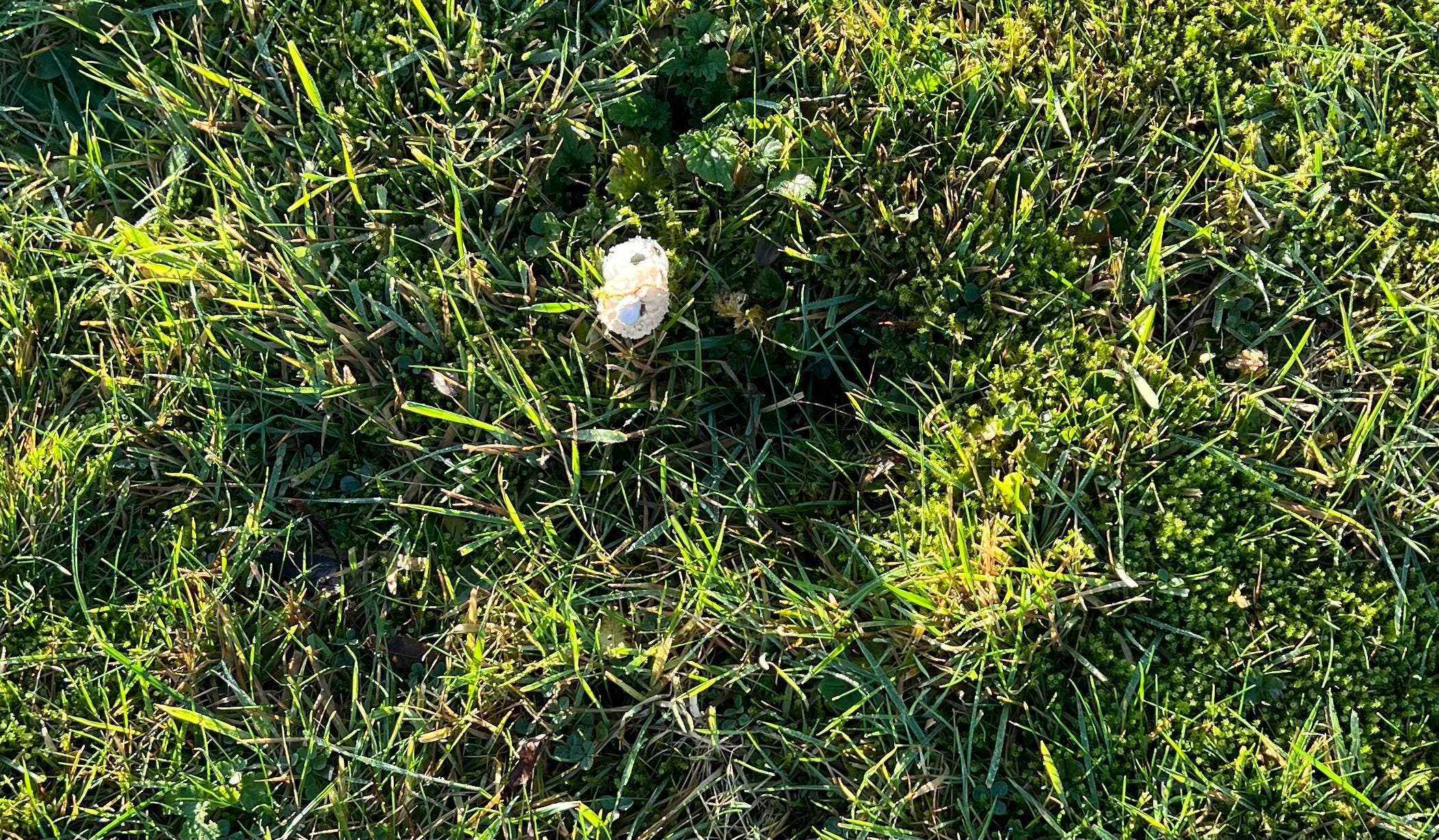
I love mushrooms of all sorts, both culinary and inedible. They can be beautiful or downright weird, but they’re certainly not boring. I saw a dog stinkhorn last week (Mutinus caninus) but unfortunately I didn’t have my camera with me. By the time I went back with it, the specimen had shrivelled into an unimpressive, barely visible protrusion. I took a photo anyway, for a location reference, and will look again next year. I know mycology may not be a topic of interest for a lot of people, but wherever you live there are bound to be fungi lurking somewhere and once you get your eye in, you can spot them easily. Mushrooms are truly magical (and not because of the hallucinogenic properties of Psilocybe semilanceata, which are best left untouched as not only are they potentially toxic, they’ve also been designated as illegal, having the same Class A drug status as LSD, heroin and cocaine). At the very least, they deserve our respect.
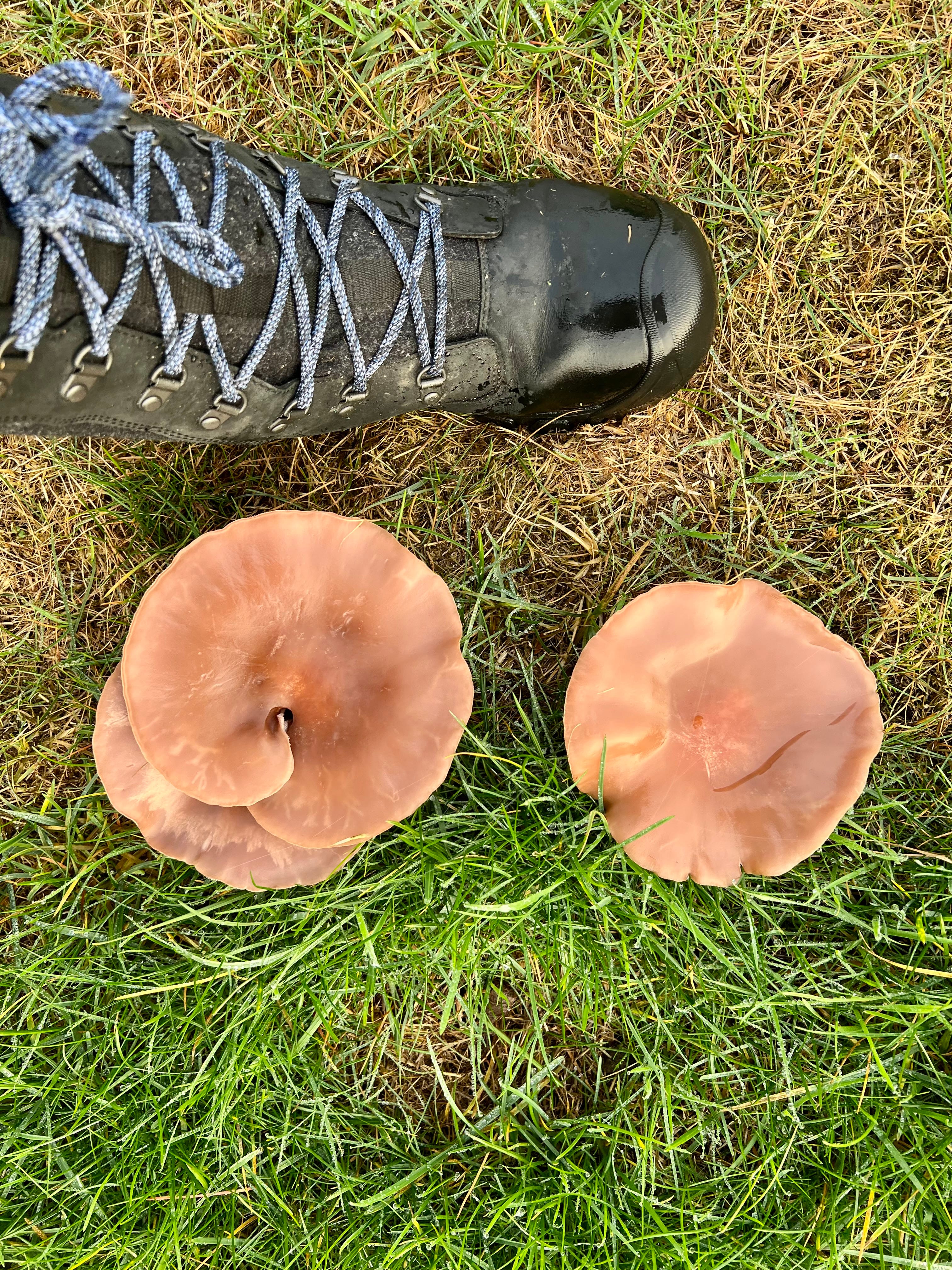
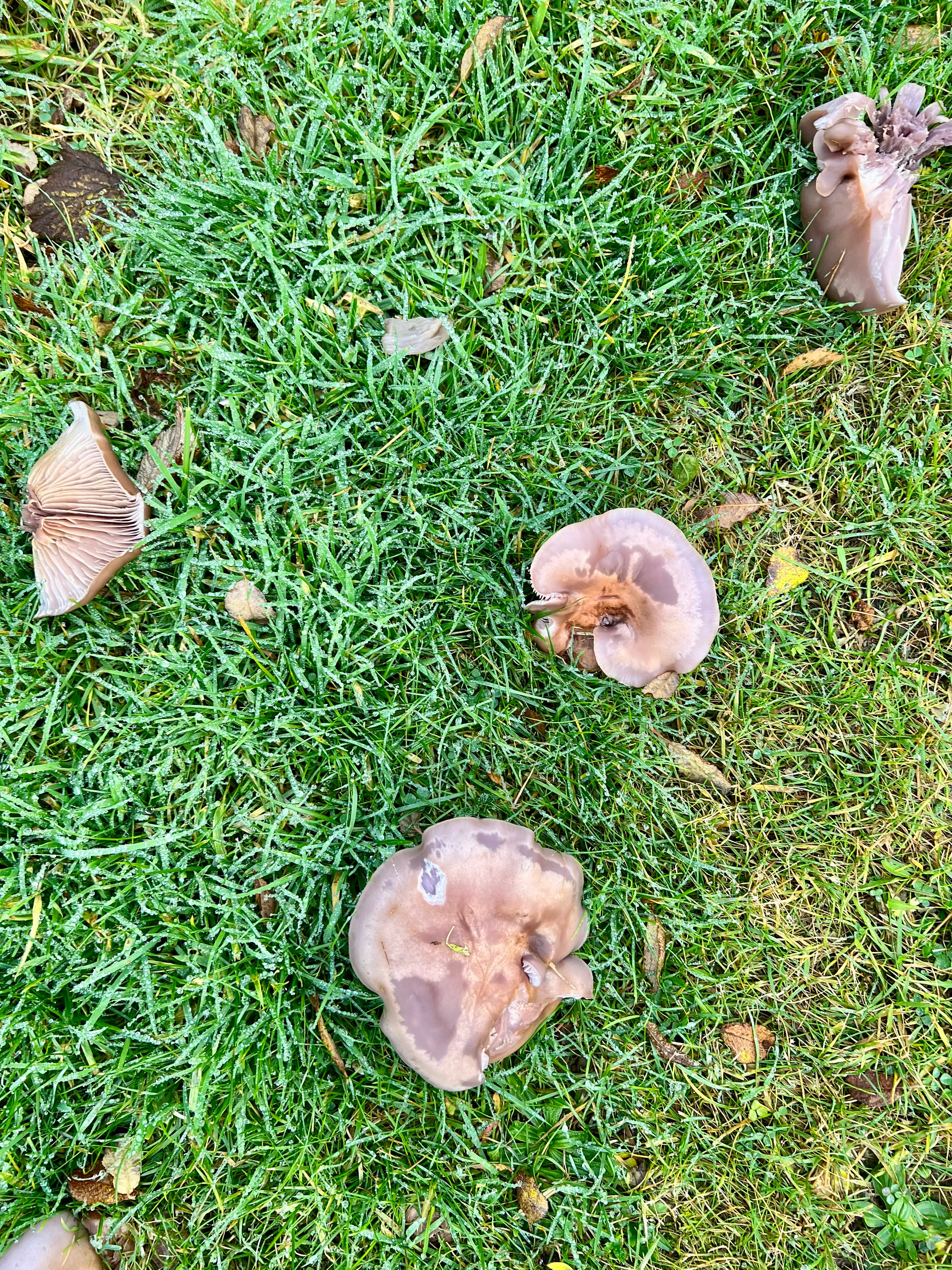
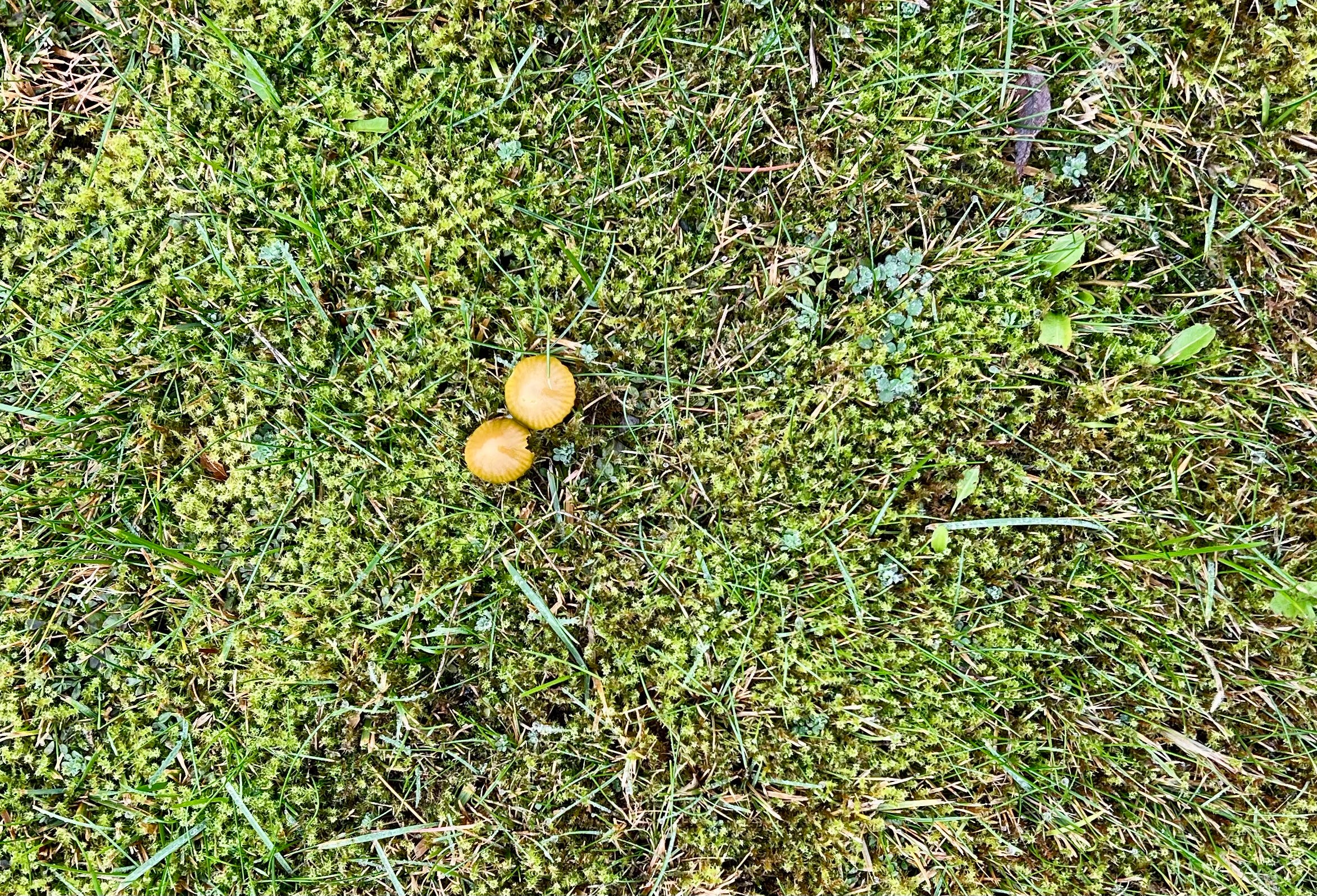
Photos taken in my garden and in our village, but not identified.

I thought you might like a bonus recipe if, like me, you’re a mushroom lover. Serves 4 people as a starter or light lunch.
Mushroom Steaks with Walnut Sauce
Ingredients for the walnut sauce:
50g walnuts, lightly toasted
1 slice wholewheat bread, briefly soaked in water
1 clove garlic, crushed
1 tbsp lemon juice
50ml extra virgin olive oil
50g creme fraiche or dairy free alternative
2 tbsp balsamic vinegar
2 tbsp olive oil
Ingredients for the Mushroom Steaks
4 large flat Portabella mushrooms
A few sprigs of rosemary, chopped.
1 lemon, cut into wedges
Method
Start by making the walnut sauce. Place the walnuts, bread and garlic in a food processor. Season, then drizzle in the lemon juice, olive oil and creme fraiche, and whizz until smooth.
Heat an iron griddle pan
Mix the balsamic vinegar and olive oil and chopped rosemary in a small bowl to make a marinade.
Cook the mushrooms on the hot griddle for a few minutes on each side, regularly basting with the marinade.
When the mushrooms are charred with bar marks, serve with the lemon wedges, spoonfuls of the walnut sauce.
Serve with toasted bread
We have just had a trio of shaggy inkpen (aka lawyers wig) fungi appear on our overgrown back lawn. It developed over three days then sank into a goo. Somewhat like a bandaged finger, then a dirty-edged umbrella, then a mess, then nothing. Apparently edible. Not for me any of them; it's the supermarket tried and tested. Amanita-free.
I do love your interesting posts in all their variety.